State.io — Conquer the World
- 4.1
- Rating
- 100.00M
- Installs
- Free
- Price

 Analysis by App-foxy
State.io — Conquer the World is a strategy game built around one deceptively simple skill: reacting quickly while deciding where your territory should expand next. I found that this focus gives the game its character. It is easy to understand within a few moments, yet a careless tap can leave a large area exposed and turn a comfortable position into a losing one. Rather than asking me to manage a complicated empire, it keeps my attention on the map, the nearby states, and the timing of each move.
That makes it a particularly approachable choice for someone who wants a strategy game without a long tutorial or a large collection of systems to learn first. CASUAL AZUR GAMES published it as a free game in the strategy category, and its broad appeal is reflected in an average rating of 4.2 from around 640 thousand ratings. I can see why it has reached more than 50 million installs: the basic idea is immediately readable, matches are easy to start, and the central decision remains clear even when the map becomes crowded.
Why fast territorial decisions define the experience
I find that the speed of territorial decisions is what gives each match its shape: a move can open a useful route, but it can also leave a border exposed before I have time to reconsider. In the next section, I look at how those early choices create goals that feel clear without requiring a lengthy plan.
You May Also Like

 AccuWeather: Weather Radar
AccuWeather Review: A Quick, Clear Forecast for Everyday Decisions
For everyday plans, the best forecast is the one you can understand quickly. AccuWeather makes rain timing, radar, and local conditions easy to act on, with a few trade-offs.

 Hill Climb Racing
Why Hill Climb Racing Still Turns Crashes Into One More Run
A tiny car, a bumpy hill and one more upgrade: Hill Climb Racing keeps resurfacing because its simple chaos makes every near-miss feel personal.

 AliExpress - Shopping App
AliExpress Makes Global Shopping Feel Personal, but Shoppers Bear the Risk
AliExpress turns a global marketplace into a pocket-sized discovery engine. Its reach is useful, its shopping loop compelling, and its trade-offs easy to miss.

 Lords Mobile: Kingdom Wars
Lords Mobile Is a Kingdom-Building Routine, Not a Quick Match
A case-by-case verdict on the building, battles, device demands, and social commitments that make Lords Mobile rewarding for some players and exhausting for others.

 PDF Scanner app - TapScanner
TapScanner Makes Paperwork Easier to Capture, Check, and Share
TapScanner makes scanning with a phone feel less like a rescue operation and more like a dependable step in getting work done. Its capture tools are useful, though not flawless.

 Block Blast!
 Shows How Much a Puzzle Game Can Leave Out
A quiet grid game shows why puzzle players increasingly value instant clarity, repeatable skill and low-pressure play—and where the genre still needs to catch up.
More From Our News Desk
View All News


The central capability is quick expansion with a plan
The important ability here is not simply tapping faster than an opponent. The real challenge is choosing when speed is useful and when it creates a weakness. Every expansion changes the shape of the map. Taking a nearby state may give me room to grow, but it can also stretch my position and make another border harder to protect. The game therefore turns a basic gesture into a small strategic calculation.
I like this balance because it gives the experience more depth than its clean presentation initially suggests. The rules are friendly enough for a casual player, but the best results come from watching the whole board instead of chasing the nearest available territory. A player who reacts instantly without considering the next move can easily lose the advantage. A player who waits too long may allow another force to occupy the useful route first.
The strongest habit is to treat every capture as preparation for the next decision, not as an isolated win. When I take territory, I immediately look at the new border and ask whether it improves my position or merely makes the map look larger. That small change in mindset makes the game feel more strategic and reduces the temptation to expand automatically.
How the map turns reaction time into strategy
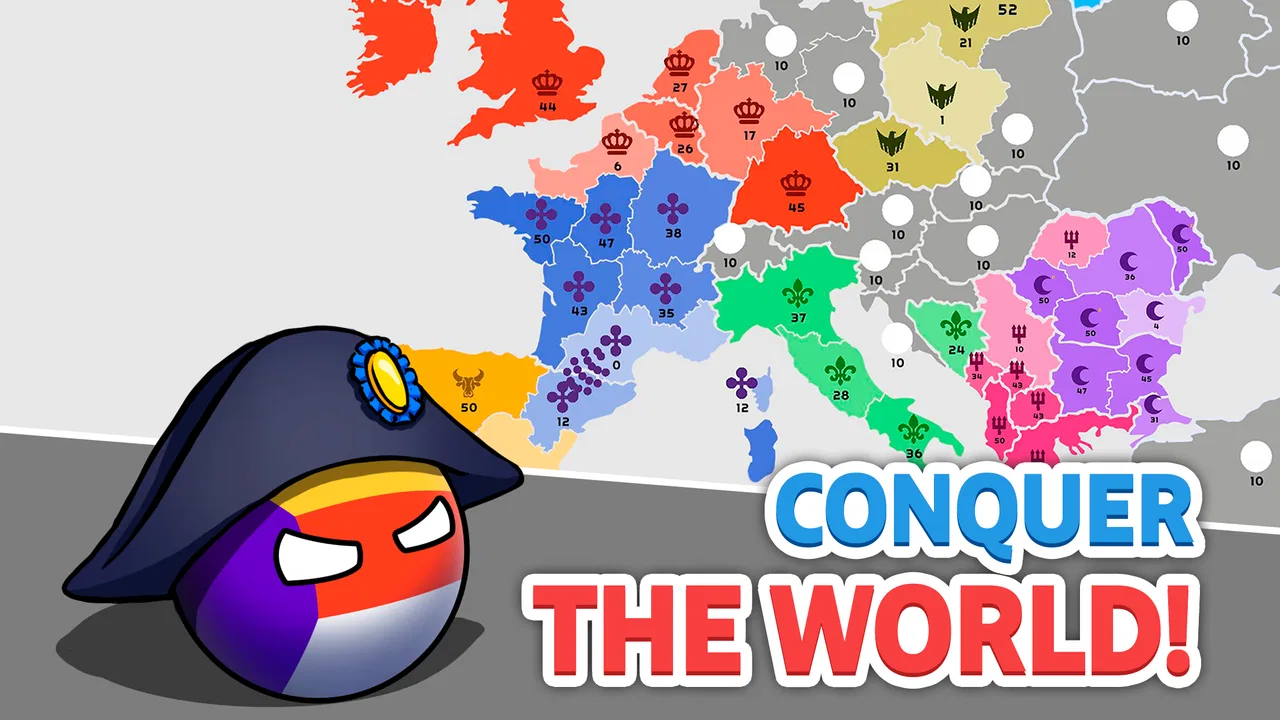
In practice, the game presents a map divided into states that compete for control. I direct expansion through quick interactions, and the outcome depends on how well I read the nearby opportunities. The action moves briskly, so there is not much room for lengthy planning. That is intentional: the game wants me to make a useful decision quickly, then adjust when the situation changes.
The most effective approach is to scan before committing. I look for a route that can be secured without opening too many vulnerable edges, then I consider which neighboring area is likely to become a problem if ignored. This is more reliable than focusing on the largest visible target. A smaller, safer gain can create a better launch point than an ambitious move that leaves my territory awkwardly divided.
Another useful technique is to avoid spending attention only on the side of the map where I am currently winning. A strong position can become fragile if an unattended border grows while I am occupied elsewhere. I have found that short, repeated checks of the entire map work better than staring at one conflict until it is resolved. The game rewards awareness as much as raw reaction speed.
Small choices matter more than frantic tapping
Because the presentation is straightforward, it is tempting to assume that success comes from moving as quickly as possible. My experience has been different. Fast reactions matter, but they are most valuable after I have already identified a sensible direction. Tapping rapidly without a clear purpose can produce a larger territory that is difficult to defend or extend.
I also learned to recognize when a move is valuable because of its position rather than its size. A state that connects two parts of my territory can be more important than a larger state at the edge. Securing a central route may give me flexibility, while an isolated gain may force me into a narrow line of attack. These are not complicated rules, but the map makes them visible through play rather than through lengthy explanations.
This is where the game differs from slower empire-building alternatives. Traditional strategy games often give me time to adjust production, research, diplomacy, or a detailed army composition. State.io removes that overhead and concentrates the decision-making into territory placement and timing. I get less long-term planning, but I also get a much faster route from opening the game to making a meaningful choice.
A realistic short-session use case
I think the best everyday scenario is a short break when I want something more engaging than a passive puzzle but do not want to commit to a long campaign. I can start a match, spend a few minutes reading the map and reacting to changes, and then put the phone down without needing to remember a complicated build order. The game’s simple entry point makes it suitable for those moments when I have attention available but limited time.
It also works well as a quick mental reset after repetitive work. I find that the need to alternate between immediate reactions and broader map checks keeps my attention active. The experience is more involved than a purely reflex-based game, yet it does not demand the preparation associated with a complex strategy title. That middle ground is the main reason I would recommend trying it to a friend who says strategy games often feel intimidating.
There is a practical limitation to this use case: the fast pace may not feel relaxing to everyone. If I am already tired or distracted, mistakes arrive quickly because the game expects me to keep reading the board. Someone looking for a calm, turn-based experience may prefer a title that allows unlimited time between decisions. State.io is better when I want focused activity, not when I want to play absent-mindedly.
Tradeoffs behind the streamlined design
The clean design is one of the game’s strengths, but it also defines what the game cannot offer. I do not approach it expecting the rich layers of a grand strategy game. There is no reason to choose it over a slower alternative if my main interest is diplomacy, detailed resource planning, or a long campaign with a developing narrative. Its appeal comes from reducing strategy to a compact contest of position and reaction.
That reduction makes the first sessions accessible, though experienced strategy players may eventually want more variety in the decisions. Once I understand the value of securing routes and watching exposed borders, the core pattern becomes familiar. The game remains enjoyable as a quick challenge, but it may not satisfy someone who needs a deep progression system to stay interested for a long time.
The free entry is helpful because I can test the central gameplay without paying upfront. At the same time, optional purchases range from $0.49 to $24.99 per item. I would approach those purchases carefully and decide whether they improve my enjoyment before spending. For me, the sensible way to evaluate the game is to play enough free sessions to determine whether the rapid map decisions are genuinely fun, rather than assuming that extra spending is necessary.
The age rating is Everyone, which matches the uncomplicated presentation and makes it an approachable choice for a broad audience. Still, “easy to understand” does not mean “equally enjoyable for all ages or play styles.” Younger players may appreciate the immediate visual goal, while adults who want a highly analytical strategy simulator may find the streamlined structure too limited. The rating describes accessibility, not depth.
How it compares with familiar strategy alternatives
Compared with a traditional turn-based conquest game, State.io is much faster and less demanding to set up. I do not need to spend a long time arranging a campaign before reaching the interesting part. The tradeoff is that I have fewer ways to express a strategy. A turn-based alternative is preferable when I want to pause, calculate several outcomes, and build a plan over a longer period.
Compared with an action game that happens to include territory, this title gives the map more importance. My attention stays on expansion routes and borders rather than on character movement or combat techniques. That makes it a better fit for someone who enjoys spatial decisions but does not want a demanding control scheme. On the other hand, players looking for dramatic action or highly varied missions may find the map-focused format too restrained.
It also differs from large mobile empire games that rely on extensive menus and long-term upgrades. State.io gets to the decision quickly and keeps the board as the main source of information. I appreciate that clarity when I want a compact session. I would choose the larger alternative instead if I wanted persistent development, a more elaborate sense of ownership, or many interconnected systems to manage.
Practical tips that improve the first sessions
My first recommendation is to slow down mentally even when the game itself feels fast. Before making a major expansion, I check which edges will become exposed and whether the new territory gives me a useful next route. This takes only a moment, but it prevents many impulsive moves. The goal is not to wait indefinitely; it is to make speed serve a plan.
Second, I avoid judging a position by total area alone. A broad shape with awkward borders can be weaker than a smaller, connected position. I pay attention to how many directions require monitoring and whether my latest gain creates a natural continuation. This is a non-obvious lesson because the visual reward of taking more territory can hide the defensive cost.
Third, I use the opening phase to observe the map rather than immediately committing to the most obvious target. Early choices often determine which routes remain available later. If I spend the beginning chasing a distant opportunity, I may give up a safer position nearby. A measured opening gives me more information and usually makes the following reactions easier.
Finally, I treat a setback as information about the map rather than as a reason to repeat the same move faster. When an expansion fails, I look at whether the problem was timing, distance, or an exposed border. That review helps me adjust on the next attempt. The game is simple enough that this kind of personal feedback is more useful than memorizing a complicated formula.
Who gets the most from the game
I would recommend it most strongly to players who want a quick strategy game with clear objectives, immediate interaction, and enough positional thinking to make each session feel active. It is especially suitable for someone who enjoys testing reactions but does not want reflexes to be the only skill involved. The map gives fast players an advantage, yet careful observation can compensate for some lost speed.
It is also a good introduction for a friend who normally avoids strategy games. The basic objective is understandable, and the interface does not ask me to learn a large vocabulary of systems before playing. I can focus on one question at a time: where should I expand, and what will that move expose? That makes the learning curve approachable without making every decision meaningless.
I would be more cautious about recommending it to players who need extensive customization, long-form progression, or a deep competitive environment. If the pleasure comes from managing an economy, developing a faction, or planning across many hours, another strategy game will probably be a better match. Likewise, anyone who dislikes quick decisions may find the pressure irritating rather than exciting.
Device requirements and overall accessibility
The game supports Android devices running version 6.0 or later, so it is not limited to only the newest phones. The current version is 3.5.2, and the free download makes trying it straightforward. I would still keep expectations realistic on older hardware: the minimum operating system tells me the software can run within that environment, but it does not promise that every device will feel equally comfortable during fast play.
Its large audience, including more than 50 million installs and around 20 thousand written reviews, suggests that the format has reached well beyond a narrow strategy niche. I see that reach as evidence of accessibility rather than proof that it will suit everyone. The game’s strongest quality is its focused design, and focused design always involves choosing what to leave out.
My recommendation after playing
After spending time with it, I see State.io — Conquer the World as a compact strategy experience centered on one effective idea: quick territorial decisions have consequences. It does not try to replace a full-scale strategy simulator, and it should not be judged by how many management systems it lacks. Its value is that I can open it, read a map, make a meaningful choice, and immediately discover whether that choice created an advantage or a problem.
The game is at its best when I approach each move with enough thought to support the speed. I enjoy it more when I watch the whole board, protect useful connections, and resist expanding simply because a state is available. Those habits reveal the strategic layer beneath the simple controls.
My honest recommendation is to try it if you want fast, map-based decision-making in short sessions. I would skip it in favor of a slower or deeper alternative if detailed empire management is the main reason I play strategy games. For the right player, however, the combination of immediate access, free entry, and quick territorial judgment makes this a satisfying little challenge from CASUAL AZUR GAMES.
FAQs for State.io — Conquer the World
01What is the main objective of State.io — Conquer the World?
State.io is a strategic game where your primary goal is to expand your territory by conquering other states. You achieve this by deploying your units strategically across various regions. The game challenges your tactical skills as you plan your moves to outsmart opponents and dominate the map.
02Is State.io available for both Android and iOS devices?
Yes, State.io is available for download on both Android and iOS platforms. Users can find the app on Google Play Store for Android devices and the App Store for iOS devices. Ensure your device meets the required specifications for optimal performance.
03Does State.io support multiplayer gameplay?
State.io features both single-player and multiplayer modes. In multiplayer mode, you can compete against other players globally, testing your strategic skills against real opponents. This adds a layer of excitement and unpredictability, enhancing the overall gaming experience.
04Are there in-app purchases in State.io?
Yes, State.io offers in-app purchases. While the game itself is free to play, players have the option to buy items and upgrades that can enhance gameplay. These purchases can help you progress faster, but they are not necessary to enjoy or succeed in the game.
05What are the system requirements for installing State.io?
State.io requires a device running at least Android 5.0 or iOS 10.0. It’s recommended to have a stable internet connection for multiplayer modes and regular updates. Ensure your device has enough storage space to download and install the game without issues.
Pros
- Engaging strategy gameplay.
- Simple
- intuitive controls.
- Offline play available.
- Regular updates with new maps.
- Challenging AI opponents.
Cons
- Ads can be intrusive.
- Requires strategic patience.
- Limited tutorial guidance.
- In-app purchases can be pricey.
- Graphics are minimalistic.

State.io — Conquer the World
Gallery